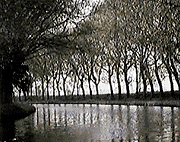
Canal du Midi
Parallel lines of great plane trees, meander in lines across the valley floor. A canal where one can wander silent in leisure, In the cool morning jog and cycle along its banks. In the afternoon find solace in the shade of the great trees. When one's stomach turns to hunger or thirst, restaurants and cafes surprise one - often in the middle of nothing but the endless reach of vineyard and sky. Tall irises, and all assortment of flowers populate bank, and the sweet smell of their scent wafts through one's nostrils.
All along its course in neighboring villages, and valleys is the potent depth of history, in castles, abbeys, and dolmens from the distant past. Stay near in the small lovely village of St Valiere, or in the canal town of Paraza and experience the canal's beauty. This is the golden land of Languedoc.
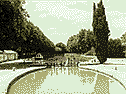
This is the Canal du Midi, the monument of Paul Riquet, his embrace with this part of France. Built, from 1666, by up to 12,000 men, crossing rivers, tunnelling through hills, irrigated from the mysterious Montagne Noir, with grace and beauty that lives on to this day. It runs 235 kilometers, requires over 100 locks. It is a love affair of man, nature, and engineering.
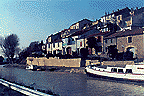
Riquet was a local baron, the tax farmer for Languedoc (fermier-général) who had ideas to join the economies of the Mediterranean to the Atlantic. With vivacity he approached Louis XIV's minister Colbert who supported its economic planning. Riquet became the canal's proud father and mother making sure of birth and delivery. Sacrificing everything to make sure of its completion - even using his daughters' dowries for the cause.
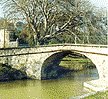
From the handsome city of Toulouse to the port of Sete, the canal cuts masterfully with grace and physical agility through the landscape. Villages and towns reaped profit from its golden days, in grand homes, houses, chateaux that brace the waters edge. Now canal boats cruise full of tourists and leisure seekers down its stretches of quiet water, where king fishers and bright birds sing. Lock keeper houses some still keep the keepers, others are renovated by travelling entrepreneurs who have put down roots and opened up restaurants.
[ Creative Hideaways | Art Workshops | Le Guide ]